Municipal staff
Planners, DPW, zero-waste committees deciding whether this site fits your jurisdiction.
Book a fit call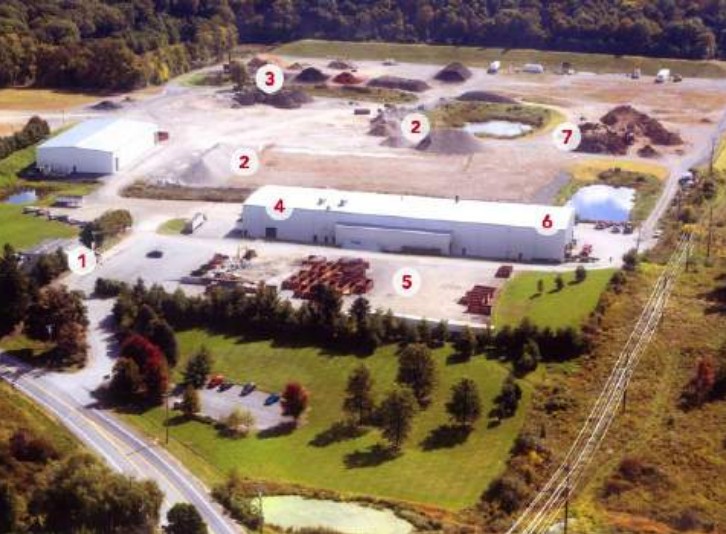
An Orange County private hauler hub ringed by four municipal WWTPs, working farmland, and invasive-biomass watersheds — the highest feedstock-variation site in the portfolio.
Why this site
Taylor-Montgomery is the densest feedstock mix in the ten. Inside the 25-mile radius: Gardnertown Farm on the agricultural side; Goshen, Newburgh, New Windsor, and Wallkill WWTPs on the biosolids side; and invasive water chestnut beds on Algonquin Park Pond and the Moodna-Creek-to-Hudson stretch that would otherwise be a disposal cost rather than a feedstock.
On the matrix: feedstock variation is the headline green (ag + biosolids + aquatic invasive in one radius is unusual for the Valley); industrial & hauling is green through the existing private hauler footprint; pyrolysis potential is also green because the aquatic invasive biomass is a natural pyrolysis feed that pairs with AD digestate. Space is watch-list and will need shortlisting before siting.
For coverage, Taylor-Montgomery sits squarely in the Orange County corridor that links the NYC demand edge with the Valley's central counties — and leans on the 25-mile food-waste-law spacing rule without crowding Beacon or the Dutchess RRA downstream.
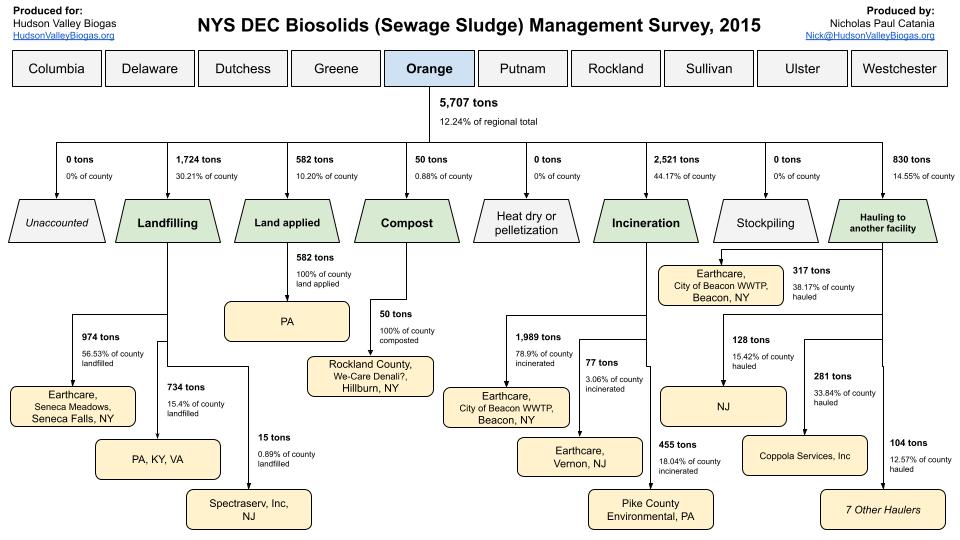
This 2015 snapshot shows Orange County's biosolids moving through landfill, hauling, and land application lanes. Use it to frame constraints before you size anything.
Evidence & policy context
The same forces that shape HVB's mission shape the case for this site — four policy and ecological drivers, grounded in a shared county-scale data resource.
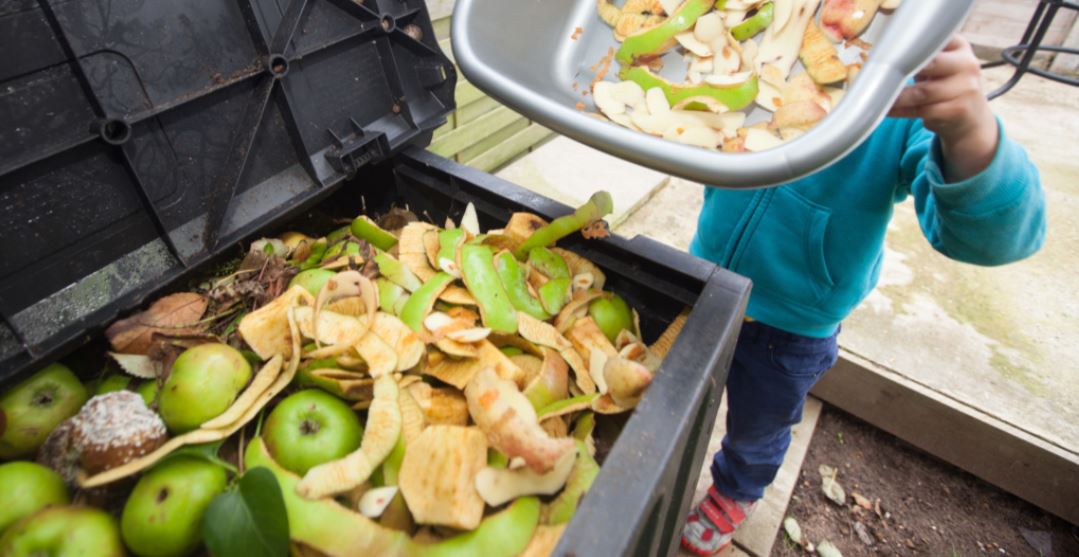
Tie this proposal into New York's 2022 organics mandate and the diversion tailwind it has created.
Read the food waste law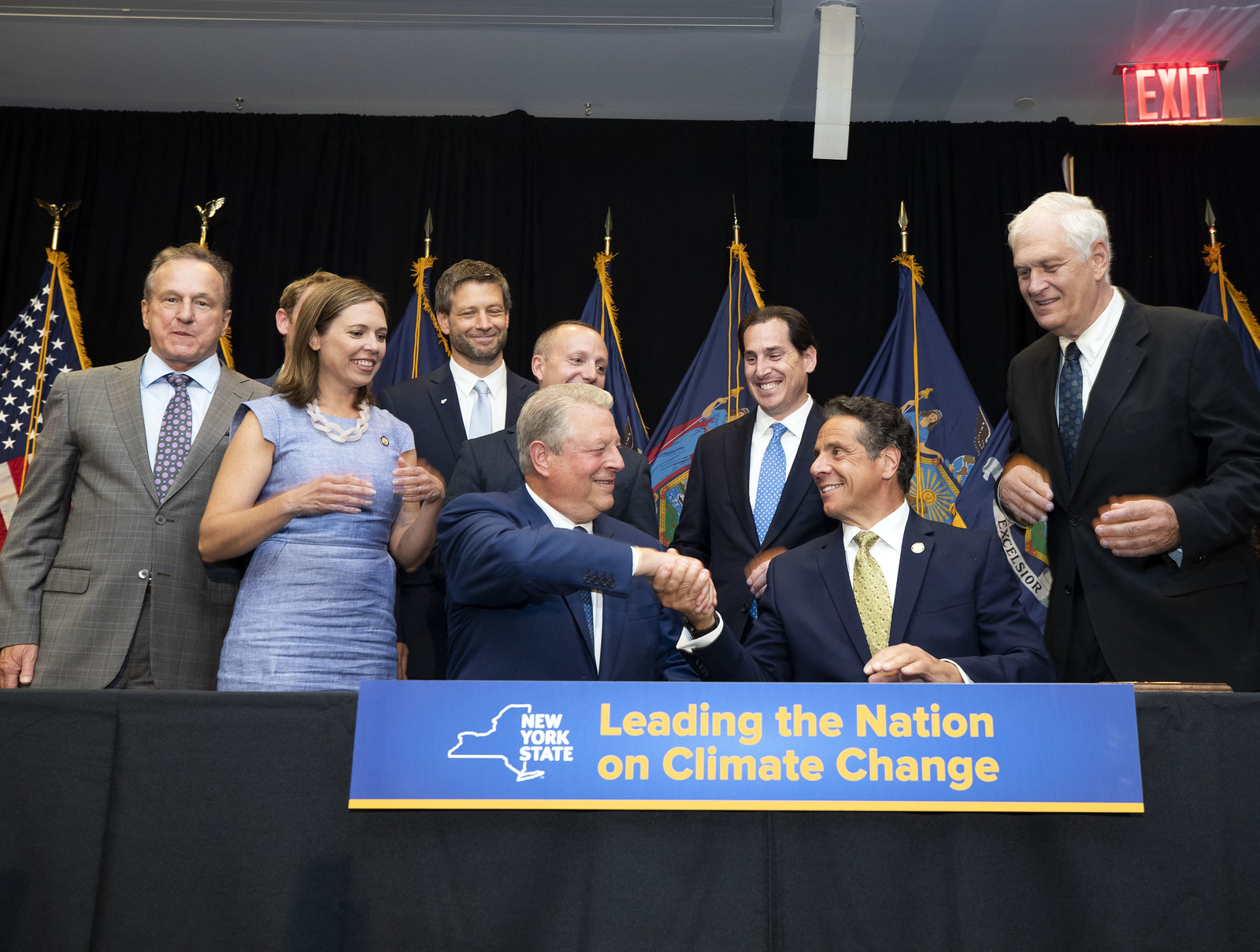
Anchor the system in the state's methane and RNG-pathway accountability framework.
View the CLCPA pathways
Screen this site against community burden and build benefits into the pilot from day one.
Explore the EJ policy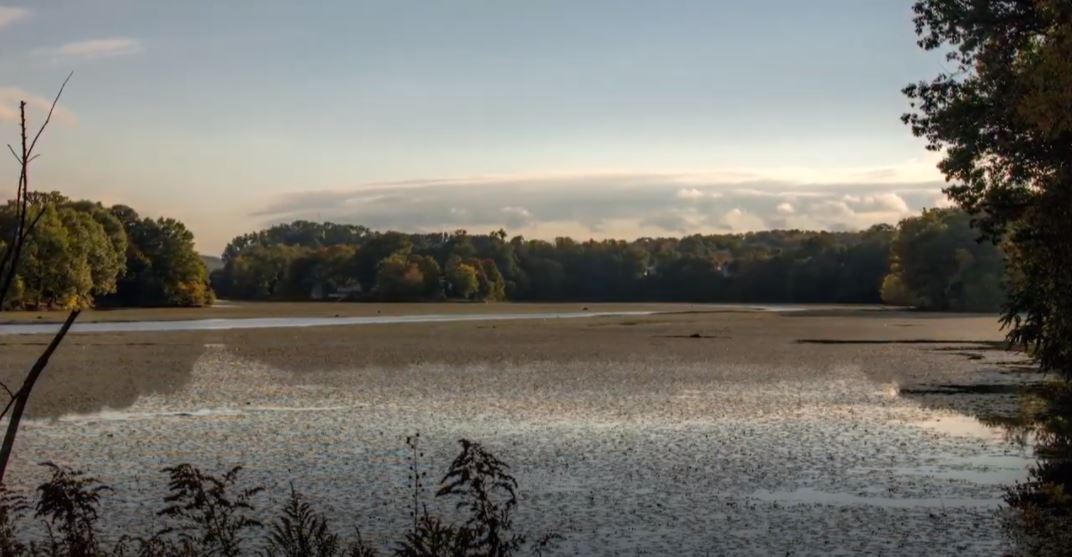
Consider whether invasive biomass streams (water chestnut, others) can contribute feedstock to this site.
See invasive biomass pilotsWhere to start
Now that you've read the briefing, pick the path that fits your role. Each leads to a 30-minute fit call to discuss this specific site.
Municipal staff
Planners, DPW, zero-waste committees deciding whether this site fits your jurisdiction.
Book a fit callGranting agency
Program officers assessing portfolio fit, site-selection rigor, and replicability.
Book a fit callCommunity
Organizers, environmental groups, and residents around this site wanting a seat at the table.
Book a fit callPress & research
Journalists, educators, and researchers covering the Hudson Valley circular organics story.
Book a fit callReady to move
We'll confirm the right lane — advisory, pilot, partnership — and pinpoint the fastest next artifact to ship together.