Pyrolysis / Biochar
Heat without oxygen locks carbon into biochar, stabilizes biogenic carbon, and feeds soils with a slow-release amendment.

HVB helps circular organics projects move in the Hudson Valley—without heroic effort. We standardize partner lanes, package pilots, and publish grant-ready artifacts teams can reuse.
Map the whole chain first, so a pilot fits the real flows and constraints.
Distribute ownership so momentum never rests on one person.
Ship reusable artifacts funders and municipalities can act on.
Every byproduct feeds the next step. What leaves one lane becomes feedstock for the next.
Organics from farms, food hubs, WWTPs, and haulers.
Sort, blend, and balance the mix for a steady feed.
Sealed anaerobic digestion releases biogas.
Clean the gas to RNG; capture CO₂ for reuse.
Energy, compost & digestate for soil, cleaner water.
Microbes break down organics without oxygen in sealed tanks — turning one input stream into three useful outputs.
Microbes decompose organics and release biogas. We track the chemistry that drives uptime and product quality:
These tools extend anaerobic digestion and keep more carbon on the land.
Heat without oxygen locks carbon into biochar, stabilizes biogenic carbon, and feeds soils with a slow-release amendment.
Finished digestate or organics that need curing go through managed composting to kill pathogens and deliver finished soil products.
Biogas separations return clean CO₂ for local reuse or reliable carbon accounting while the methane stream becomes RNG fuel.
Perennial grasses and bulky feedstocks stay fresh in low-tech clamps, keeping moisture and density stable for the digester.
A shared visual language keeps every systems diagram clear at a glance.
Smaller systems reduce barriers so we can learn faster.
The HVB flywheel turns ideas into pilots, then fundable plans, then replicable templates.
We map the whole chain so we don't build isolated projects that collapse under real-world constraints.
HVB is designed to run on distributed ownership. Partners pick lanes with clear contributions.
We move from inquiry to a grant-ready package via a clear sequence.
Each stage produces an artifact. That keeps work visible, decisions faster, and pilots easier to replicate.
We start with the regional systems map so every pilot fits the actual flows and constraints.
Clear lanes keep conveners, municipal sponsors, developers, feedstock anchors, and grant leads aligned.
We turn the intake into an 8–10 week grant-ready package with stories, risks, and next-proof artifacts.
Artifacts—one-pager, FAQ, benefits map—get shared publicly so stakeholders see progress and trust.
Lessons feed the next site; the flywheel spins because templates, partners, and data repeat.
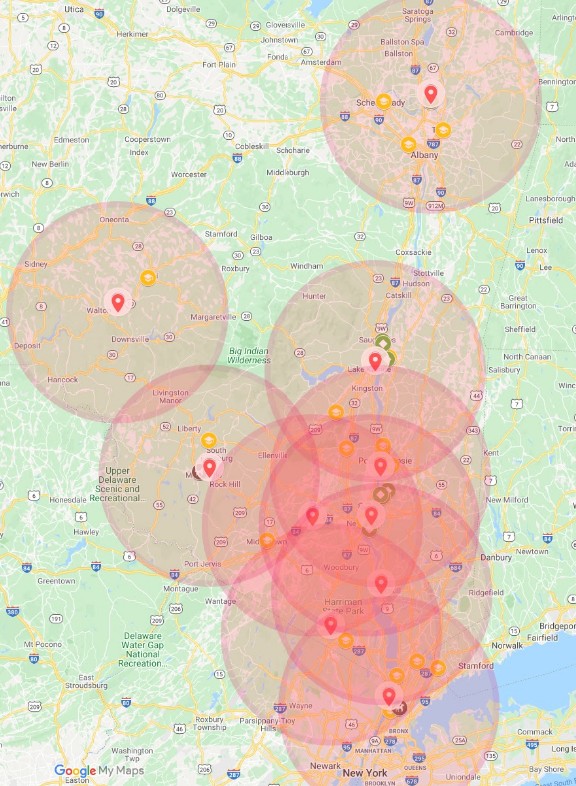
Capture the basics: location, stakeholders, feedstocks, constraints, and benefits.
Fastest path: Propose a pilot site.
Check routing, permits, ops needs, and community risk—fast.
Confirm lane owners so the project doesn't depend on one person.
Choose your lane: Partners.
Produce the artifacts funders and municipalities need to decide.
Submit to a grant program or hand the package to a developer.
Turn lessons into a repeatable playbook for the next site.
Clarity prevents mismatched expectations and wasted motion.
The questions people ask when they're serious (and appropriately skeptical).
HVB's role is to make pilots move by aligning partners, community legitimacy, and fundable packaging. Actual project delivery is typically led by municipalities, developers, and operators.
If you have a location: Propose a pilot site. If you want to help: choose a lane on Partners. If you need to sync: Book a fit call.
By treating EJ as an early design constraint—not a late-stage checkbox. We surface burdens, benefits, and community questions before teams lock in a plan that erodes legitimacy.
Yes—HVB maintains a library of reports, legislation, and research. We focus on translating it into usable decision artifacts and locally relevant project pathways.
reports/circular-systems.
HVB moves when real people pick real lanes and commit to shipping a proof artifact. Choose your path:
We publish assumptions, sources, and system boundaries. Claims are tied to primary references.