
Circular biogas systems
Ten siting concepts and a coverage strategy for Hudson Valley circular systems. Use the diagrams to answer who operates, how waste moves, and where funding fits.
Every diagram layers partners, constraints, and reuse loops so your coalition can tell one story about circular pilots.
Ten storylines, one coverage plan
Each archetype pairs a site type with partner lanes, organic inputs, and infrastructure so you can see exactly how materials flow through a circular system.
The coverage strategy shows how the diagrams tile across the Hudson Valley, where hauling corridors land, and which partners own each lane of the service area. Use it to pick the next county, site, or funding ask that fits your coalition.
Key takeaways
- Ten archetypes cover WWTPs, composters, transfer stations, and storage partners so pilots start with familiar site types.
- The coverage strategy frames how the diagrams link across counties and how you can stack partner responsibility.
- The narrative layers precise handoffs, policy seams, and funding cues so stakeholders hear the same story.
Report preview
Every spread shows how partners, flows, and infrastructure interlock so you can cite concrete lanes of stewardship.
The narratives explain the coverage strategy and the diagrams that keep teams aligned through siting, permitting, and funding.
Report structure
- CLCPA sections tie the coverage strategy to New York's decarbonization mandates so you can cite the approved pathways in every pitch.
- Biosolids Safety notes walk through handling diagrams and permit cues for each archetype.
- Environmental Justice callouts name the community benefits, screening, and engagement steps mapped to each lane.
- Invasive Species guidance points to the biosecurity controls that ride alongside hauling and reuse flows.
- Food Waste Law references explain how sourcing, collection, and processing sit inside the organics mandates.
Keep this preview handy in grant pitches and stakeholder decks so the visuals stay consistent across conversations.
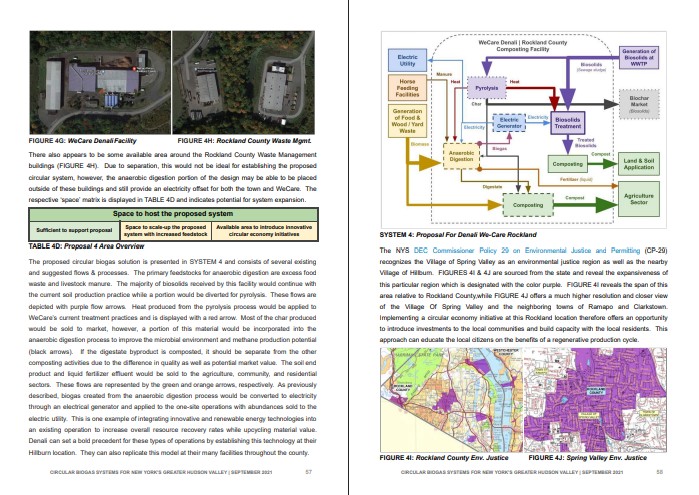
How to use these diagrams
Treat each spread as a conversation starter for partners, funders, and municipal sponsors.
- Match a diagram to the site you are sizing and call out the partner lane that needs backing.
- Layer the coverage plan to show how the diagram fills in gaps across counties.
- Share the PDF in meetings so everyone sees the same flows and constraint calls.
- Pair the visuals with your funding pitch so reviewers can trace impact from source to reuse.
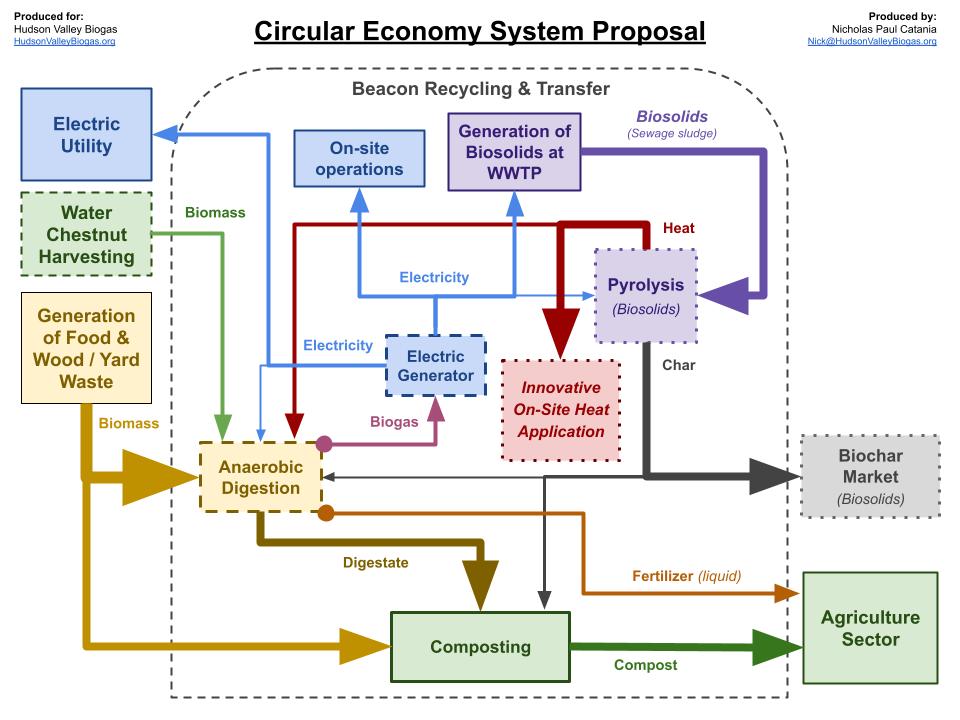
Next step
Have a site candidate? Use the pilot intake so HVB can pair the archetype, partners, and funding checklist immediately.
Want to package one of these archetypes for a partner? Book a fit call to align the coalition and start shipping artifacts.